
- Home
- AI Summarizer
- Logically
Logically
Open Website-
Tool Introduction:AI research assistant for refs, reviews, notes—PDF Q&A and summaries.
-
Inclusion Date:Oct 28, 2025
-
Social Media & Email:


Tool Information
What is Logically AI
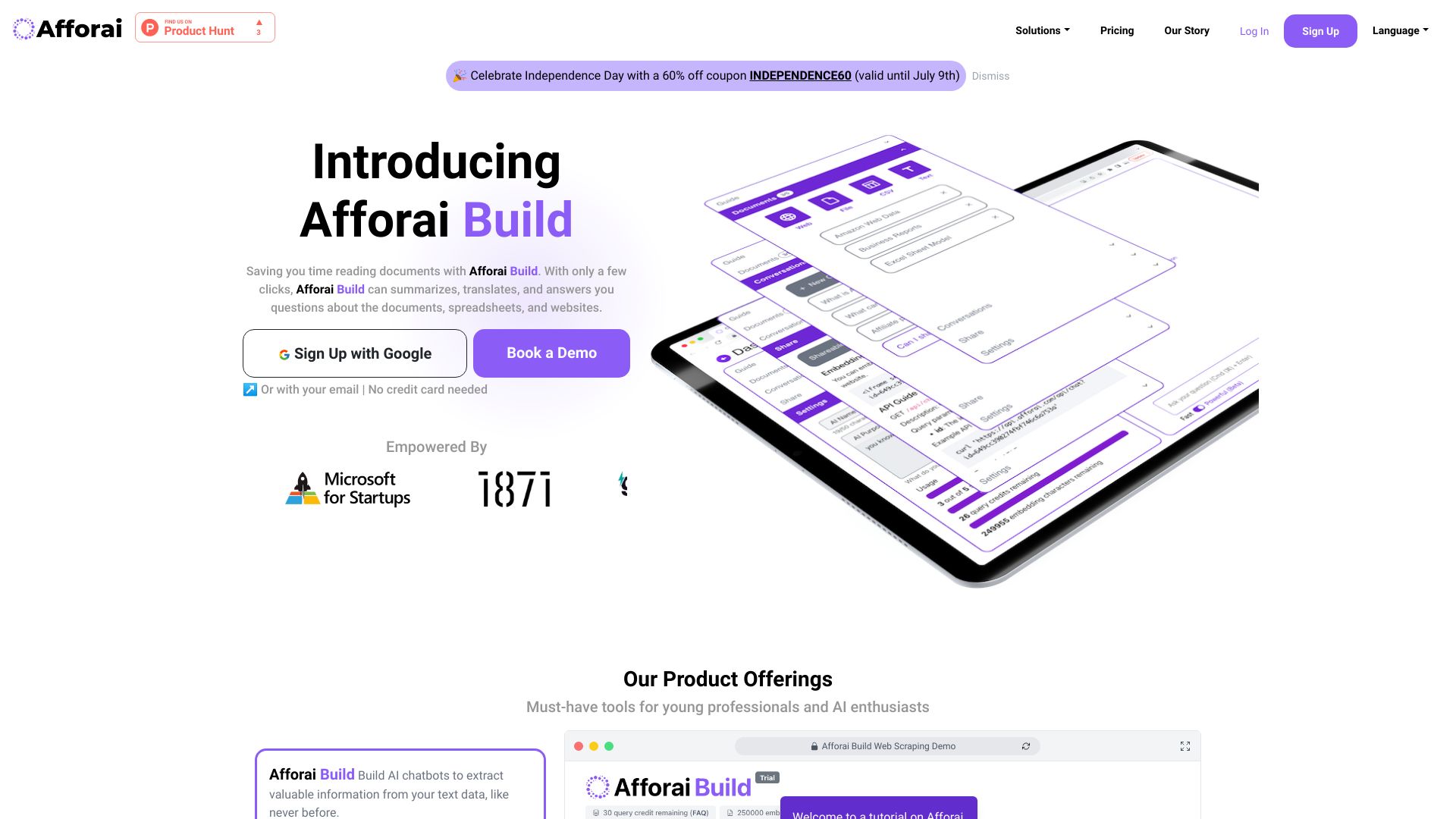
Logically AI (Logically.app, formerly Afforai) is an AI research assistant that unifies reference management, literature review, PDF annotation, note-taking, and academic writing in one workspace. It blends familiar strengths of tools like Zotero, Mendeley, ChatGPT, and Adobe Acrobat to help you collect sources, read deeply, and synthesize evidence. With advanced document interaction—summarization, translation, and question answering—it turns long papers into actionable insights. The team claims up to 5x better quality and 10x more coverage compared with typical AI chatbots.
Logically AI Main Features
- Unified research workspace: Centralize sources, notes, and drafts so you can move from discovery to writing without context switching.
- Reference organization: Manage and categorize references, capture metadata, and keep your library tidy for faster retrieval.
- PDF annotation: Highlight, comment, and annotate documents to create a searchable layer of insights across your readings.
- AI reading assistant: Summarize sections, translate passages, explain terms, and clarify methods directly within your files.
- Multi-document Q&A: Ask questions across multiple papers and receive synthesized answers grounded in your uploaded materials.
- Semantic search: Find concepts, claims, and evidence across your library using meaning-aware search rather than keywords alone.
- Literature review support: Extract themes, compare findings, and assemble structured notes to accelerate review writing.
- Drafting tools: Turn structured notes into outlines and prose to jumpstart sections of reports, essays, or papers.
- High-coverage document interaction: Designed for long, complex documents with claims of stronger coverage and quality than typical chatbots.
Who Should Use Logically AI
Logically AI suits students, graduate researchers, and academics conducting literature reviews or writing research papers. It also helps analysts, consultants, journalists, policy and legal researchers, and knowledge workers who need to read large volumes of documents, extract key evidence, and produce clear summaries or drafts efficiently.
How to Use Logically AI
- Create an account and start a new project to organize your topic or assignment.
- Import sources by uploading PDFs or adding links to research articles and reports.
- Organize your library with folders or tags, and review metadata for consistency.
- Open a document to annotate: highlight important passages and add notes or questions.
- Ask the AI to summarize sections, translate passages, explain concepts, or answer targeted questions.
- Compare insights across multiple documents to identify themes, agreements, and gaps.
- Convert structured notes into an outline, then generate and refine draft paragraphs.
- Review and verify AI-generated claims against the original sources before exporting or finalizing your writing.
Logically AI Industry Use Cases
In academia, a graduate student synthesizes dozens of papers for a literature review, using multi-document Q&A to extract methods and key findings. In market and competitive intelligence, an analyst ingests whitepapers and reports, leveraging summarization and translation to process multilingual materials quickly. In policy and legal research, a team reviews lengthy regulations, annotates obligations, and asks targeted questions to surface relevant clauses for compliance briefs.
Logically AI Pros and Cons
Pros:
- All-in-one workspace for reference management, deep reading, synthesis, and drafting.
- Strong document interaction with summarization, translation, and multi-document Q&A.
- Speeds up literature reviews and reduces manual note-taking across long PDFs.
- Semantic search helps locate concepts and evidence beyond simple keywords.
- Supports working with multilingual sources through built-in translation.
Cons:
- AI outputs require verification; factual errors or hallucinations can occur.
- Extraction quality may vary with complex layouts, scans, or tables in PDFs.
- May not replace specialized citation tools for advanced formatting workflows.
- Very large libraries or extremely long documents can still hit practical limits.
Logically AI FAQs
-
Does Logically AI replace tools like Zotero or Mendeley?
It can complement traditional reference managers by adding AI reading, summarization, and synthesis. For highly specialized citation formatting or complex bibliographies, you may still prefer a dedicated citation manager.
-
Can it handle multiple documents at once?
Yes. You can ask questions across multiple uploaded sources to synthesize answers and compare findings.
-
Does it work with non-English documents?
It offers translation and explanation features to help you read and analyze content in other languages.
-
How accurate are the summaries and answers?
They are helpful for orientation and synthesis, but you should verify important claims and quotations against the original documents.
-
What types of projects is it best for?
It shines in literature reviews, evidence synthesis, report drafting, competitive analysis, and any workflow that requires reading many long documents efficiently.